#chip #chips #euro #import #rent #semiconductor
|


|
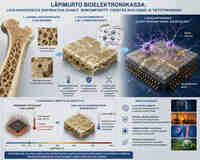
Silicon carbide in neural interfaces: The review Silicon Carbide Neural Interfaces: A Review of Progress discusses the chemical inertness, structural durability and biocompatibility of SiC as a material for neural interfaces.
Bioelectronic neural interfaces in general: The review Bioinspired Materials for In Vivo Bioelectronic Neural Interfaces provides background on why biocompatible materials are important in interfaces between the brain and electronics.
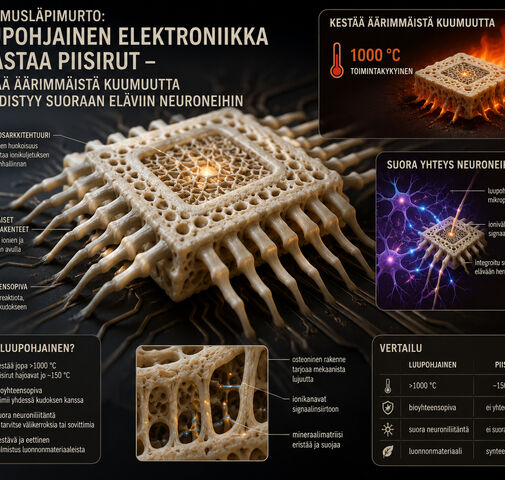
Important clarification: No single source was found that directly claims that a “bone-based microprocessor challenges silicon chips.” In your news text, that is an editorial synthesis of these research lines: the heat resistance of hydroxyapatite, biocompatible neural interfaces, the durability of silicon carbide and the ability of artificial neurons to communicate with living neural tissue.
The most important promise, however, is not heat resistance alone. Bone-like materials could help bridge the gap between electronic machines and living nerve tissue. Neurons process information through electrochemical impulses, ion channels and membrane voltages, so future bioelectronics may need materials that do more than imitate circuits: they must also communicate in biology’s electrical language.
If hydroxyapatite-based mineral platforms, heat-resistant materials such as silicon carbide and artificial neuromorphic neurons can be combined, they could lead to a new class of neuroelectronics. Possible applications include brain–computer interfaces, smart implants, neural prosthetics, rehabilitation after nerve damage, monitoring of diseases such as epilepsy and Parkinson’s disease, and biological sensors for hot or radiation-heavy environments. The research is still at an early stage, but it points toward electronics that do not merely calculate, but interact directly with living biology.

https://vunet.net